| © Copyright, 2007-2011 Sensorize Sensorized All rights reserved. Use the information provided on this site as an educational resource for determining your options and making your own informed choices. It is not intended as medical advice or to diagnose, prescribe, or treat any specific illness. |
Get your Radio Flyer accessories here: plus many more
bean bag styles!
More jumping, bouncing, and balancing ideas at...

| Sensorize |
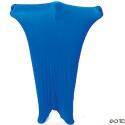
| Proprioceptive System The proprioceptive system refers to components of muscles, joints, and tendons that provide a person with a subconscious awareness of body position. When proprioception is functioning efficiently, an individual's body position is automatically adjusted in different situations; for example, the proprioceptive system is responsible for providing the body with the necessary signals to allow us to sit properly in a chair and to step off a curb smoothly. It also allows us to manipulate objects using fine motor movements, such as writing with a pencil, using a spoon to drink soup, and buttoning one's shirt. This sense also tells us about the force of our movements. So if we see a cup and want to reach for it, we can judge how much force and speed we are reaching with so we can accurately get our hand to the cup without knocking it over or missing it. We can also tell how hard we need to hold on to lift the cup without squashing it or dropping it. It is primarily proprioception you are using when you walk a familiar flight of stairs in the dark and know exactly where to place your feet and how high the steps are by the feel of the movement of your legs. This sense is extremely important for body awareness and coordinated movements. Some common signs of proprioceptive dysfunction are clumsiness, a tendency to fall, a lack of awareness of body position in space, odd body posturing, minimal crawling when young, difficulty manipulating small objects (buttons, snaps), eating in a sloppy manner, and resistance to new motor movement activities. Some children may crave intense proprioceptive experiences, such as crashing into walls, banging toys, tumbling in a pile of pillows and general roughhousing to get stronger sensory messages, and some children may avoid such input as much as possible. They're the kids slumped over their desks like limp noodles while doing homework or who are usually "too tired" to play outside. Therapy may include bouncing on a trampoline, bouncing on a large ball, crawling, hanging from a bar by the arms, tug-o-war, prolonged drawing on a vertical chalkboard, jumping rope, pillow fights, throwing a weighted ball (like a beach ball partially filled with water),and pushing heavy objects. Heavy work activities provide joint compression and traction and help us feel grounded in our bodies. See our Motor Skills page, Yoga for Kids, and Gymnastics for stretching and core strengthening exercises. Heavy work activities for parents and teachers. One of the most commonly used and "prescribed" therapeutic interventions in Occupational Therapy is the use of weighted products to provide proprioceptive input and deep pressure. The therapeutic use of weight and "deep pressure" to the muscles, joints, tendons and ligaments allows the central nervous system to better interpret and integrate both tactile (sense of touch) and proprioceptive (sense of movement, body position, and pressure) input. Deep pressure will calm and soothe an over-aroused, disorganized, or "fearful" nervous system. Weighted products are used for several reasons with children who do not properly process sensory stimuli/input. The 3 main reasons are: to improve body awareness, to calm and improve attention and focus, and to decrease sensory seeking behaviors. This particular treatment is used world wide in schools, clinics, homes, and communities. It is safe, effective, and can make enormous differences in these children! Daily life becomes more tolerable, physically calm, and emotionally regulated. Some therapists also use a Lycra/Spandex body sock. Body socks increase spacial awareness through balance and resistance, allowing children with sensory dysfunction to more effectively use their body, leading to less falls, more coordination, and overall increased confidence in daily activities. Also useful for deep pressure input are bean bag chairs and resistance tunnels. Another dimension of proprioception is praxis or motor planning. This is the ability to plan and execute different motor tasks. In order for this system to work properly, it must rely on obtaining accurate information from the sensory systems and then organizing and interpreting this information efficiently and effectively. Therapy might include mazes, obstacle courses, constructional toys, building blocks, sequences of tasks, Simon Says, Red Light – Green Light, swimming, playing charades, and playing tag while running backwards or sideward. |
Proprioception
 |
| |
 |
| |
 |
| |
 |
| |
 |
| |
 |
| |
 |
| |
 |
| |
 |
| |
 |
| |
 |
| |
 |
| |
 |
| |
 |
| |
 |
| |
 |
| |
 |
| |
 |
Make sure to get a safety enclosure with your
trampoline. Find them here in all sizes.
trampoline. Find them here in all sizes.

| Toys, Products, and Ideas for Sensory Education |


 |  |  |  |  |  |